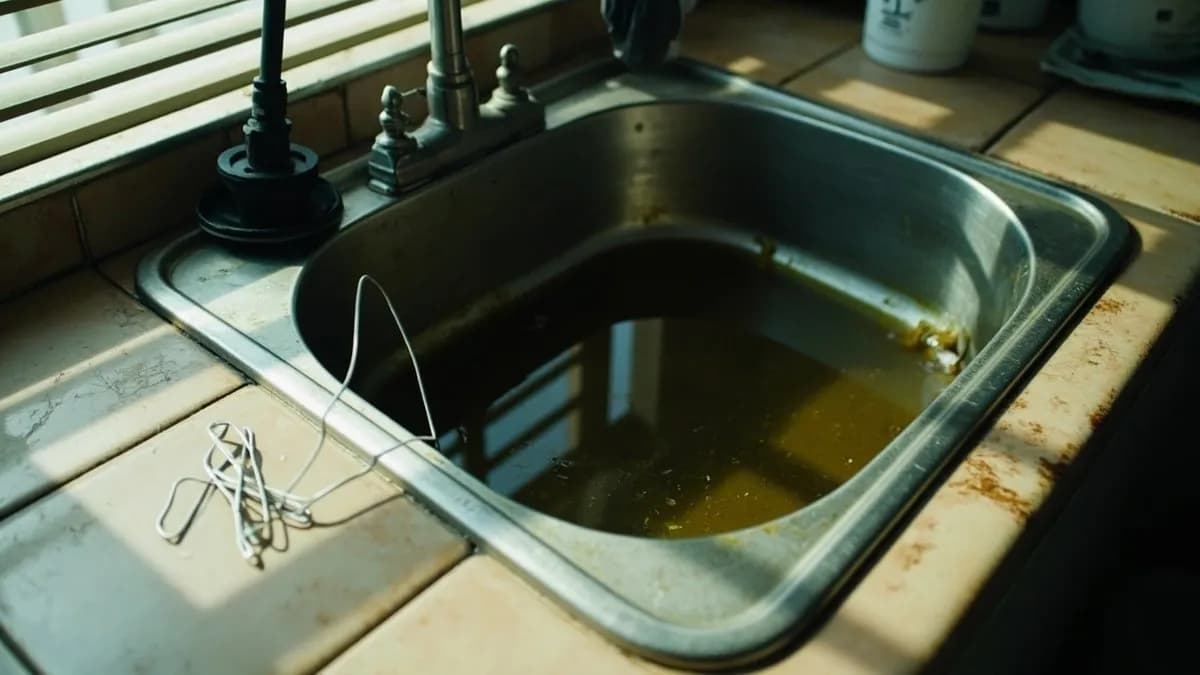
Why Kitchen Sinks Block So Often
Cooking with oil, coconut milk, curries and starchy water is part of everyday life here. The problem is that warm grease looks like a liquid going down the drain, but it cools inside the pipe and turns into a sticky coating. Food scraps, rice starch and soap then cling to it, and the pipe narrows until water barely moves.
What Usually Causes the Blockage
- Cooking oil and grease poured down the sink
- Rice, noodles and starchy cooking water
- Coffee grounds, eggshells and small food scraps
- A trap or strainer that has not been cleaned in months
- A waste pipe with a low spot where residue collects
Safe Things to Try Yourself
- Remove the strainer and clear any visible food waste.
- Use a cup plunger. Block the overflow opening with a wet cloth and plunge firmly for 15 to 20 seconds.
- Place a bucket under the trap, unscrew it by hand and clean out the residue.
- Flush with hot (not boiling) tap water once the line is open.
Be careful with chemical drain cleaners. Strong products can damage pipe joints and are hazardous if they splash back. They also tend to burn a small channel through the clog rather than removing it.
What Goes Down the Drain and What to Do Instead
| Item | What It Does | Do This Instead |
|---|---|---|
| Used cooking oil | Hardens in the pipe and traps debris | Let it cool, pour into a container and bin it |
| Greasy pans | Leaves a film inside the trap | Wipe with paper towel before washing |
| Rice and noodles | Swells and clumps with grease | Scrape into the bin |
| Coffee grounds | Packs into dense sludge | Throw into the bin |
When to Call a Plumber
Home methods will not solve every blockage. Call a professional if:
- The sink blocks again within days of clearing
- You hear gurgling from other drains when the sink empties
- Water backs up into another sink or floor trap
- There is a persistent foul smell even after cleaning
If several fixtures are affected at once, the blockage may be in a shared line. Inform your building management as well, since they may need to check the common pipework.
Our plumbers clear stubborn chokes, check the trap and pipe slope and give you practical advice so the problem does not return.
What Is Really Happening Inside the Pipe
To stop a sink from choking repeatedly, it helps to picture what is going on out of sight. Below the sink sits a curved section of pipe called the trap. It holds a small amount of water that blocks drain odours from rising into the kitchen. Beyond the trap, the waste pipe slopes gently away so gravity carries water out.
Grease does not simply disappear in this journey. As warm oil cools, it clings to the pipe wall. Each wash adds another thin layer, and food particles stick to it. After weeks or months, the opening has shrunk to a fraction of its original size. At that point, one more spoonful of rice or a few coffee grounds is enough to stop the flow completely.
Warning Signs Before a Full Blockage
Sinks rarely go from perfect to totally blocked overnight. Watch for early signals so you can act while the problem is still small.
- Water takes longer than usual to disappear after washing dishes
- Gurgling or bubbling sounds as the sink drains
- A sour or rotten smell that returns soon after cleaning
- Small bits of food residue floating up from the drain
- Water pooling around the strainer for a few seconds before it clears
A Simple Routine to Keep Your Sink Flowing
Prevention is far easier than clearing a heavy blockage. A short, regular routine makes a big difference.
Every Day
- Wipe oily pans and plates with paper towel before washing
- Empty the strainer into the bin after each meal
- Run hot tap water for a short while after washing greasy dishes
Every Week
- Remove and rinse the strainer and stopper
- Wipe the inside of the sink drain opening with a brush
Every Few Months
- Check the trap underneath for build-up, if it is easy to reach
- Look for damp spots or drips in the cabinet
How to Clean the Trap Step by Step
Cleaning the trap is one of the most effective jobs you can do yourself, provided your trap is the removable type and the connections are in good condition.
- Place a bucket under the trap and lay an old towel in the cabinet.
- Loosen the connecting nuts by hand. Avoid forcing them, since old plastic can crack.
- Remove the trap and empty it into the bucket.
- Rinse it with water and clear out any residue with a brush.
- Check the rubber seals for damage and refit the trap, tightening the nuts snugly by hand.
- Run water and look carefully for drips at each joint.
If a nut is stuck, a seal looks perished or the pipe is cracked, stop there and call a plumber. Forcing it can turn a small blockage into a leaking cabinet.
Why Some Blockages Keep Coming Back
If you clear the sink and it chokes again within days, the cause is usually deeper than the trap. Possible reasons include:
- A flat or sagging waste pipe: a low spot lets grease and food settle and build up.
- Heavy residue further down the line: plunging may clear only the nearest part.
- A shared drain stack problem: several homes feed into the same line, and a blockage downstream affects everyone.
- Poor venting: air cannot enter the pipe properly, so water drains slowly and gurgles.
A plumber can inspect the slope and clear the full length of the waste pipe, instead of just the first section.
Kitchen Sink Types and Drain Habits
| Sink Setup | Common Issue | Helpful Habit |
|---|---|---|
| Single bowl with basket strainer | Fine debris slips through | Use a fine mesh strainer and empty it daily |
| Double bowl | Shared waste pipe collects residue faster | Clear both outlets when cleaning the trap |
| Sink with dishwasher connection | Dishwasher water adds load to the same drain | Scrape plates well before loading |
| Older metal pipe | Rough inner surface catches residue | Schedule periodic professional cleaning |
Myths About Clearing Blocked Sinks
- "Boiling water fixes everything." Very hot water can soften grease briefly, but it can also damage plastic pipes and seals. Hot tap water is a safer choice.
- "Dish soap will dissolve the grease." Soap helps with washing, but it does not remove a thick layer already stuck in the pipe.
- "Chemicals are the quickest solution." They may open a small channel but leave most of the build-up behind, and they carry safety risks.
Remember: Grease that reaches the shared drain can contribute to blockages beyond your own home. Binning used oil is considerate to your neighbours as well as good for your own pipes.
What a Professional Clearing Service Includes
When you call a plumber for a choked sink, a thorough job usually covers more than just pushing the blockage through.
- Finding out how long and how often the problem has occurred
- Inspecting the strainer, trap and visible waste pipe
- Clearing the blockage with suitable tools along the pipe
- Flushing the line and checking for proper flow
- Looking for leaks or worn parts while the cabinet is open
- Explaining what caused the problem and how to avoid it
Final Thoughts
A choked kitchen sink is rarely bad luck. It is usually the result of small daily habits adding up over time. With a little care, you can keep the drain flowing freely for years. And when a blockage does persist, getting professional help early prevents leaks, smells and the frustration of a kitchen that cannot be used.
Need a Plumber in Singapore?
Talk to the team at SG Plumbing Service Pte Ltd for a clear quote before any work starts.
- Phone: +65 8434 3660
- WhatsApp: +65 8544 8704
- Email: sgplumbingservice@gmail.com
- Address: 234 Serangoon Road, #04-234E, Singapore 218083
- Website: www.sgplumbingservice.com