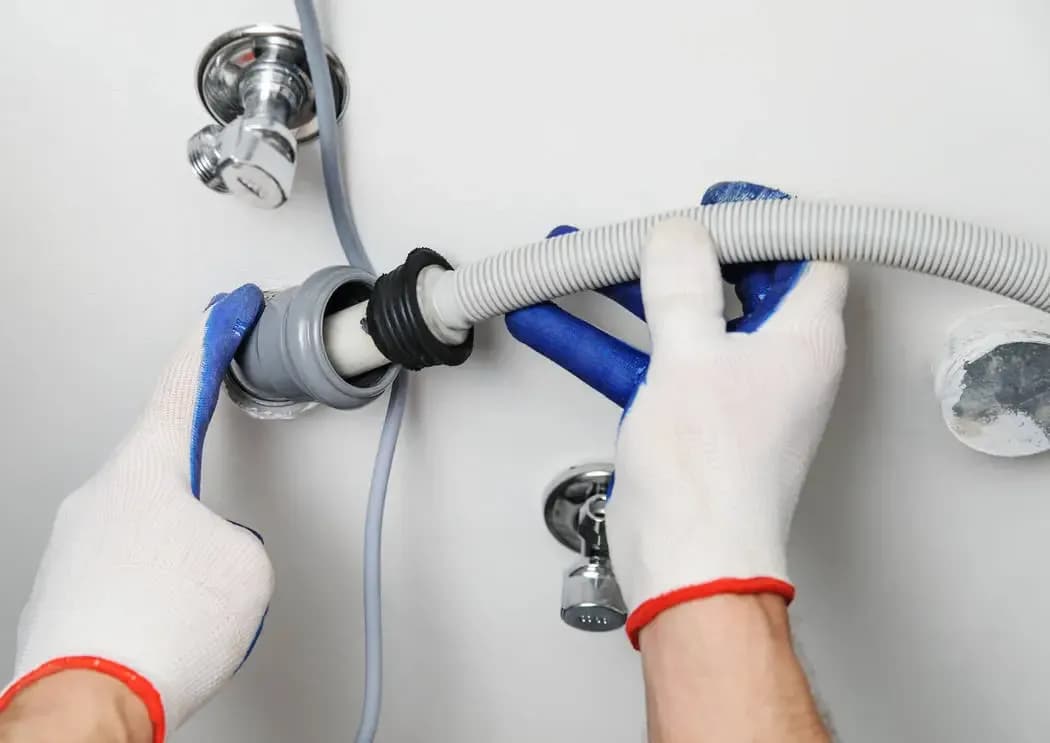
Why Washing Machine Hoses Fail
The inlet hose is under water pressure all day, even when the machine is not running. Over time the rubber hardens, the inner lining weakens and the metal ends can corrode. When it finally gives way, water can flow freely until someone notices, which is a real risk when the home is empty.
Warning Signs to Look For
- Bulges, cracks or flaking on the hose surface
- Rust or white crust around the metal connectors
- Drips or damp patches at the tap or the machine connection
- A hose that feels stiff or looks discoloured
- Water on the floor after a wash cycle
How to Inspect Your Hoses in 2 Minutes
- Pull the machine out slightly, if there is room, to see both hose ends.
- Run your hand along the inlet hose and feel for bulges or soft spots.
- Check the tap connection with a dry tissue. Any moisture shows a slow leak.
- Make sure the outlet hose is firmly seated and not kinked behind the machine.
Inlet Problems vs Outlet Problems
| Problem | Typical Sign | Usual Fix |
|---|---|---|
| Worn inlet hose | Bulging, cracks, drips at joints | Replace hose and seals |
| Faulty washer tap | Leak from the tap body or handle | Replace the tap or valve |
| Outlet hose slipping | Water on the floor during spin | Secure the connection properly |
| Slow drainage | Water remains in the drum or backs up | Clear the drain line and check outlet height |
| Odour behind the machine | Drain smell in the room | Reseat the outlet and check the floor trap |
Habits That Prevent Flooding
- Turn off the washing machine tap after use, especially before holidays or long outings
- Replace old rubber hoses with good quality reinforced ones
- Consider hoses with built-in burst protection
- Never leave the machine running unattended for long periods when the hoses are old
- Keep the floor trap clear so overflow has somewhere to go
As a general guide, inspect washing machine hoses yearly and replace them proactively when they show age. A new hose costs far less than repairing flood damage.
Need a New Washer Point?
If you are moving the machine or renovating your service yard or kitchen, a plumber can install a new inlet tap and outlet connection in the right position so hoses are not stretched or kinked.
How Your Washing Machine Connects to the Plumbing
Every washing machine depends on two plumbing connections. The first is the water supply: a tap on the wall feeds a flexible inlet hose that carries water into the machine. The second is the drain: an outlet hose carries used water away, usually into a standpipe or floor trap. When either connection is poor, you get leaks, slow drainage or damage to the machine.
Choosing the Right Inlet Hose
Not all hoses are equal. Cheap rubber hoses may last only a short time under constant pressure. When you replace yours, consider the following.
- Reinforced or braided hoses: these have a protective layer that resists bulging and bursting.
- Correct length: too short strains the connections, while too long can kink and restrict flow.
- Proper end fittings: metal ends should be free of rust and fit the tap and the machine snugly.
- Burst protection: some hoses include a safety feature that stops the flow if the hose fails.
- Fresh seals: always fit new rubber washers, since old ones may no longer seal.
Installing a New Washing Machine Tap
If your washer tap is old, corroded or leaking from the handle, replacing it is better than patching it repeatedly. A good washer tap should turn smoothly, shut off completely and have a threaded outlet that matches the inlet hose. Installing it involves closing the supply, removing the old tap, fitting the new one with the correct sealing method and testing under pressure. Because it touches the water supply line, it is best done by a plumber.
Getting the Outlet Right
The outlet side is just as important as the inlet, yet it is often ignored until water appears on the floor. Several factors affect how well the machine drains.
Outlet Height
If the outlet hose or standpipe sits too low, water can siphon out of the drum during the wash cycle. If it is too high, the pump struggles to push water up. Follow the machine maker's guidance on the recommended height.
Secure Connection
During the spin cycle the hose can move and slip out of the drain. Using a proper holder or a fixed standpipe prevents this.
Free-Flowing Pipe
Kinks, tight bends and lint build-up all slow drainage. Leave a little slack behind the machine and keep the path straight.
A Working Floor Trap
If the floor trap is blocked or overflows, wastewater may rise when the machine drains. Cleaning it regularly keeps the whole system working.
Troubleshooting Table
| Symptom | Possible Cause | What to Do |
|---|---|---|
| Machine fills very slowly | Partly closed tap or blocked inlet filter | Open the tap fully and clean the filter at the hose connection |
| Error message about water supply | Tap off or low flow | Check the tap and hose for kinks |
| Water on the floor at the tap | Loose hose nut or worn washer | Replace the washer or hose |
| Water on the floor at the back of the machine | Loose outlet or cracked hose | Reseat or replace the hose |
| Water stays in the drum after washing | Blocked outlet, pump filter or drain | Check the pump filter, then clear the drain line |
| Smell from the drain behind the machine | Dry or dirty trap, poor seal | Clean the trap and reseal the outlet connection |
Simple Maintenance That Pays Off
- Clean the inlet filter. Many machines have a small mesh filter where the inlet hose connects, which catches sediment.
- Clean the pump filter, if your machine has an access panel, to remove lint, coins and small items.
- Wipe the door seal and detergent drawer to prevent odour and mould.
- Run an occasional hot cleaning cycle following the manufacturer's advice.
- Check the level of the machine so that it does not vibrate and pull hoses loose.
Away from home? If you are travelling for several days, closing the washing machine tap takes a few seconds and removes the risk of an unattended burst hose.
Washing Machine in the Kitchen or Service Yard
Where your machine sits affects how the plumbing is arranged. In a kitchen, the supply and drain may share space with the sink lines, so accessibility matters. In a service yard, connections are exposed to moisture and temperature changes, which can speed up wear. In either case, make sure the tap is within easy reach, because you should be able to close it quickly in an emergency.
When You Need a New Washer Point
You may need a new water point if you are moving the machine, renovating the kitchen or installing a washer-dryer in a new location. A proper new point includes a dedicated tap, a suitable drain connection and sensible positioning so that hoses are neither stretched nor squeezed. Planning this at the renovation stage is much cheaper than altering finished walls later.
Protecting Your Neighbours
In apartment living, a leak does not stay in your home. Water can run through floors and affect the unit below. Regular hose checks, a working floor trap and quick action on drips protect both your home and your relationships with neighbours.
What a Plumber Does on a Washing Machine Visit
- Checks the tap, hose connections and seals for leaks
- Replaces worn hoses, taps or valves
- Inspects and secures the outlet connection and standpipe
- Clears the drain or floor trap if slow drainage is present
- Runs a cycle to confirm there are no leaks and that the water drains properly
Final Word
A washing machine is one of the hardest-working appliances at home, and its hoses take the strain. A little inspection, timely replacement and a well-planned connection can prevent flooding and keep laundry day stress-free.
Need a Plumber in Singapore?
Talk to the team at SG Plumbing Service Pte Ltd for a clear quote before any work starts.
- Phone: +65 8434 3660
- WhatsApp: +65 8544 8704
- Email: sgplumbingservice@gmail.com
- Address: 234 Serangoon Road, #04-234E, Singapore 218083
- Website: www.sgplumbingservice.com